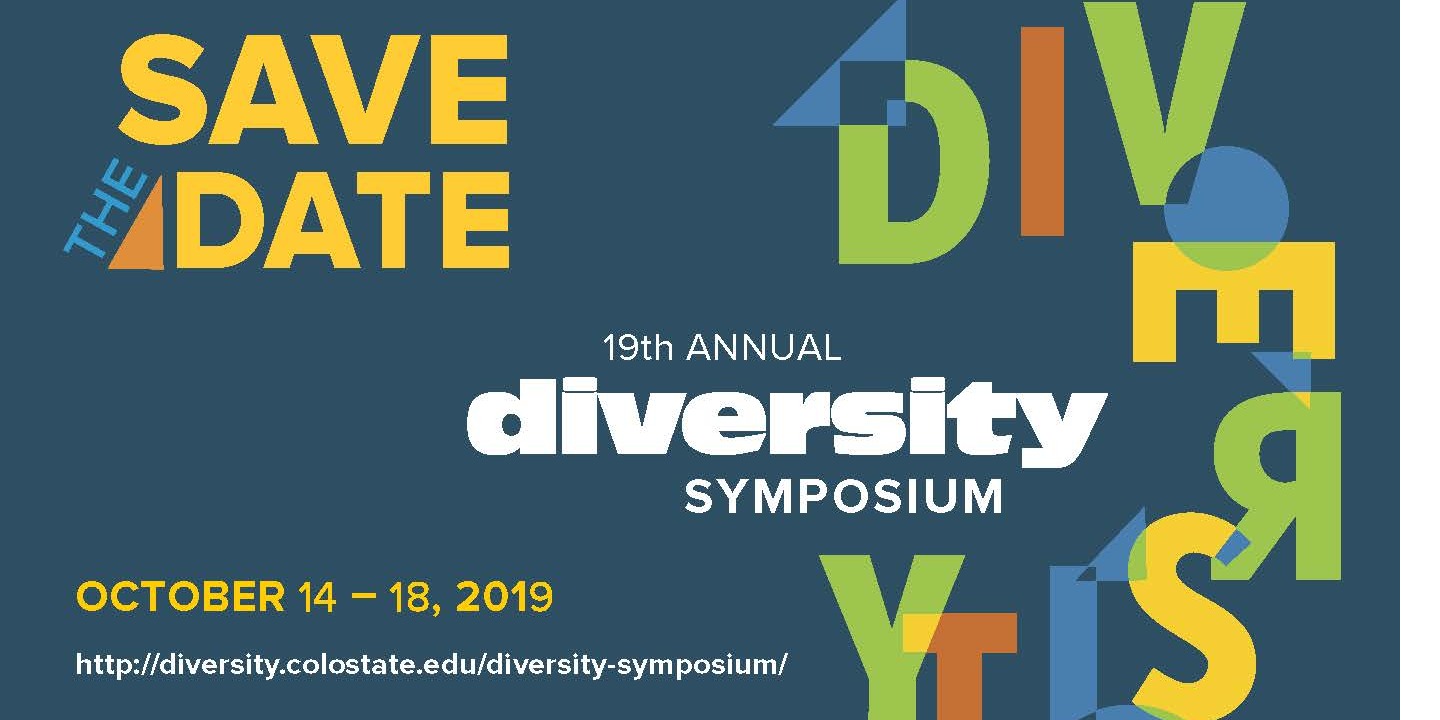
Colorado State University hosts an annual Diversity Symposium, featuring more than 50 free sessions that are open to anyone. This year I went to “Including Students with Intellectual and Developmental Disabilities in Higher Education”, presented by Shelby Bates, the Outreach Coordinator for the Colorado Initiative for Inclusive Higher Education, and James Graham, the Director of the Center for Community Partnerships and Professor in the Department of Occupational Therapy at CSU.
This session discussed The Colorado Initiative for Inclusive Higher Education, whose websites states their mission as “Creating fully inclusive college opportunities in Colorado for students with intellectual disabilities to foster academic growth, social development, and career advancement” (IN Colorado Initiative for Inclusive Higher Education). The ultimate goal of this program is long-term success and independence for students with intellectual disabilities, giving them opportunities for higher education that have not been available in the past.
“Students with intellectual disabilities who successfully complete an inclusive, post-secondary education realize a competitive employment rate over 70%,
compared to less than 30% for similar adults with no post-secondary education” ( IN Colorado Initiative for Inclusive Higher Education), and according to Bates and Graham, 65% of students in the program had a paid job in their community one year after exiting. These are exciting statistics, new opportunities that present circumstances which allow people with intellectual disabilities to continue their education after high school. The term “inclusive education” is defined as involving “a transformation of the education system with changes and modifications in content, teaching methods, approaches, structures, strategies, and review mechanisms in place”, which is usually contrasted with “segregated education”, defined as when “students with disabilities are educated in separate environments (classes or schools) designed for students with impairments or with a particular impairment” (Inclusion International).
What most shocked me about the session was my own lack of knowledge. I have never learned information about higher education for students with intellectual disabilities, and I never considered its importance. In addition to the difference between segregated and inclusive education, I learned the difference between accommodations and modifications. “An accommodation changes how a student learns the material. A modification changes what a student is taught or expected to learn” (The Understood Team).
Ultimately, the Colorado Initiative for Inclusive Higher Education aims to foster independence, academics, career preparation, and social confidence. This program is not mandated, but should still be adopted by universities dedicated to diversity and inclusion.
For additional reading and resources:
https://www.nps.gov/articles/disabilityhistoryrightsmovement.htm (The history of the Disability Rights Movement)
https://thinkcollege.net/tpsid (TPSID funding and grants for people with intellectual disabilities)
https://inclusivehighered.org/ (Website of the Colorado Initiative for Inclusive Higher Education)
https://www2.ed.gov/policy/highered/leg/hea08/index.html (Higher Education Opportunity Act of 2008)
Works Cited:
“FAQs.” Inclusion International, https://inclusion-international.org/catalyst-for-inclusive-education/faq/#unique-identifier1.
“IN! Colorado Initiative for Inclusive Higher Education.” IN! Colorado Initiative for Inclusive Higher Education, https://inclusivehighered.org/.Team, Understood.
“The Difference Between Accommodations and Modifications.” The Difference Between Accommodations and Modifications, Understood, 16 Oct. 2019, https://www.understood.org/en/learning-thinking-differences/treatments-approaches/educational-strategies/the-difference-between-accommodations-and-modifications.

 Audrey's Blog
The statistic you shared about employment statistics (“Students with intellectual disabilities who successfully complete an inclusive, post-secondary education realize a competitive employment rate over 70%,
compared to less than 30% for similar adults with no post-secondary education”) was staggering. I have seen the benefits of inclusion in secondary schools, but did not realize how important it could continue to be in a post-secondary environment. Also, thank you for sharing the article on modifications vs. accommodations. So often those words are used interchangeably and it is important that classroom teachers know the difference and work with case managers to ensure that students on IEPs are given both the modifications and accommodations they need to be successful in a general ed setting.
LikeLiked by 1 person