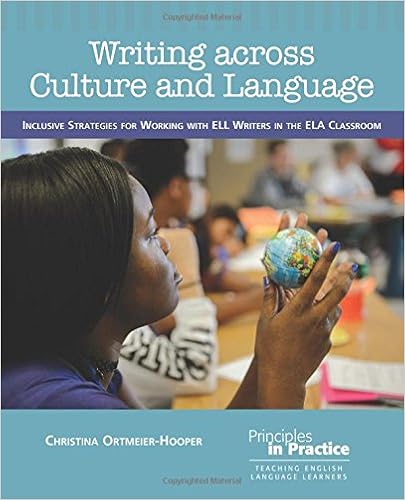
This week I was reading about the strengths of English Language Learner (ELL) and multilingual students in the classroom from Writing across Culture and Language by Christina Ortmeier-Hooper. The book uses an asset-based approach to teaching classes with multilingual and ELL students. Asset-based teaching “seeks to create lifelong learners who are confident in their abilities to master new skills” through focusing on student’s talents rather than their deficits (ACRL Instruction). This method of treating students with optimism, focusing on their abilities and how they contribute, is the hopeful alternative to teaching students from a deficit-based perspective, where they learn about what they can not do and internalize the message that there is something wrong with them. In today’s political and social climate, it is increasingly important to model an asset-based approach, specifically for students of different cultures and ethnicities, to teach a message of acceptance and inclusivity.
In Writing across Culture and Language, Ortmeier-Hooper describes the concept of ‘translanguaging’, defined in the book as “the flexible use of language resources in order to make meaning in our lives and in our complex social and academic worlds” ( Ortmeier-Hooper, 28). She elaborates, describing how translanguaging allows multilingual students to think and interact with many different language codes simultaneously, developing the ability to “pull from a single, rich linguistic repertoire that brings together all their language resources, and they have learned to deploy those resources in selective, strategic, and effective ways”(Ortmeier-Hooper, 29). This asset-based perspective uses research and factual evidence, allowing educators to see their multilingual and ELL students as extremely advanced in their linguistic and code-switching abilities. When we think of our students as gifted and complex thinkers, our expectations are higher, which allows us to help them succeed.
ELL students are developing in complex ways and have advanced linguistic and code-switching abilities, but they are also learning a new language. How do we, as educators, make the classroom as functional and helpful for them as possible? From Writing across Culture and Language, personal experience, insights from International college students, and additional resources, here are a few strategies for teachers to welcome multilingual students in the physical space of the classroom as well as the social environment:
- Incorporating music from different cultures and languages allows students to access different codes and levels of understanding
- Learning the proper pronunciation of unfamiliar student names in private to avoid repeatedly asking
- Labeling classroom items in multiple languages
- Ice-breaking activities for students to get to know each other in a low-risk environment
- Using table-work or small group activities to allow students to build confidence speaking, give more time for reflection, and allow them to practice before larger discussions
- Pre-teaching, consider background knowledge or vocabulary words that students will need to know before a lesson or text, a lot of this information is culturally-specific (handouts with author names/concepts/vocabulary words in advance)
- Make sure students are comfortable in new culture/with specific customs
- For writing: ideas about “good writing” differs between cultures, make sure to be aware of this when grading work and make your expectations clear and consistent
- Allow for speaking opportunities in class, such as mini-presentations (let students choose their own topics), group work, or discussions, give them opportunities to work one-on-one with teacher first to build confidence
Works Cited:
“Five Things You Should Read About Asset-Based Teaching.” Instruction Section Website, https://acrl.ala.org/IS/five-things-you-should-read-about-asset-based-teaching/.
Ortmeier-Hooper, Christina. Writing across Culture and Language: Inclusive Strategies for Working with ELL Writers in the ELA Classroom. National Council of Teachers of English, 2017.
Wang, Ruijun, et al. 1 Nov. 2019.

 Audrey's Blog
Thank you for breaking down some recommendations and strategies offered by the authors of your readings. At first, I was a little anxious reading your blog thinking about how difficult it was going to be to “create” this environment for my ELL students. However, after reading the list of recommendations, I found that these are strategies that can be easily adapted in our current community.
LikeLiked by 1 person