“Until I feared I would lose it, I never loved to read. One does not love breathing.” – Harper Lee
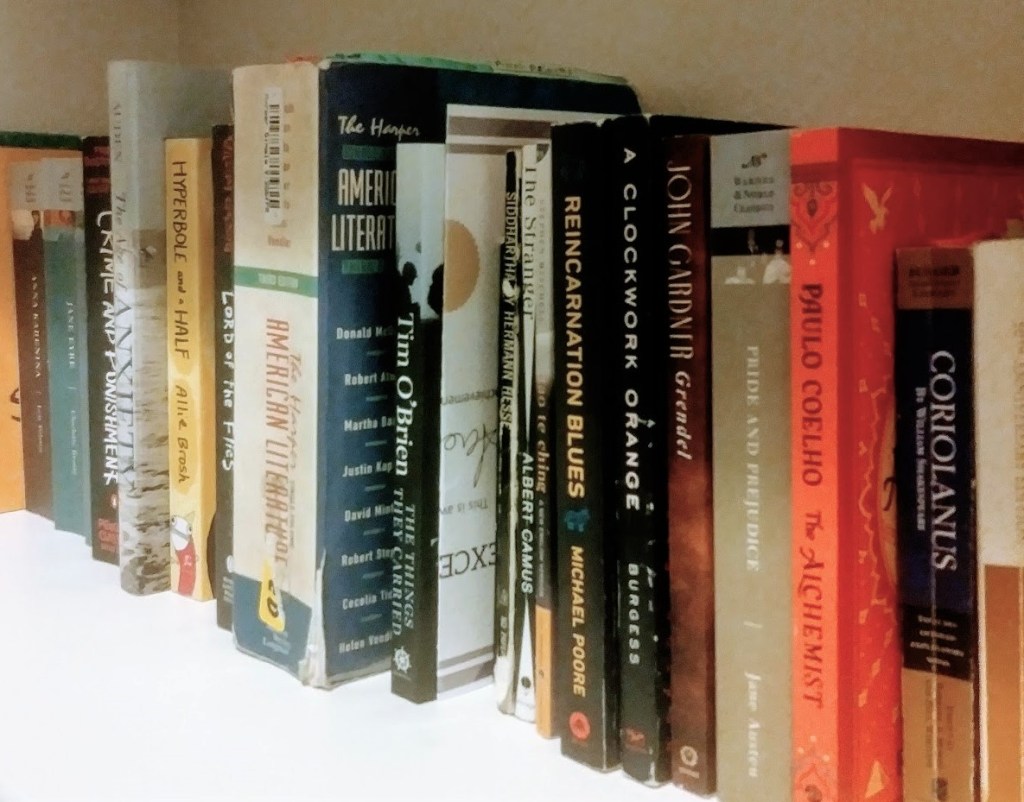
When I entered 6th grade, books stopped being fun. Somehow I had internalized an unspoken rule of middle school, that I could no longer read about magic and mermaids anymore. This was not explicitly stated, yet somehow I still believed that the treasured books of my childhood were now off-limits for me, a Very Grown Up 6th grader. So instead of reading about fantastical quests, loyal friends, and mysterious beasts, I followed my older brother’s lead and dove into the genre of existential philosophy.
Yes, this was a very questionable decision for a twelve-year-old, but my reading habits had never been monitored before, so it was no big deal when I read The Myth of Sisyphus, by Albert Camus, Beyond Good and Evil, by Friedrich Nietzsche, and the novel A Clockwork Orange, by Anthony Burgess.
What resulted from this rapid consumption of philosophy was the death of enjoyable reading for me. Although it was self-imposed, my world had mutated from fairies and gentle morality into dark spiraling investigations about the meaning of life. For the next few years, this was my entire reading experience, other than the few books that were required for my English classes.
After my brother graduated from high school and there was no one to supply me with reading, I stopped it altogether. For the next few years, I read only what was necessary for getting satisfactory grades, and forgot completely about my childhood book joy. When I got to college however, I took an introductory Literature class and instantly fell in love with the material. As an English major now, I am very aware of how important reading is to me. I read for class, I read outside of class, I read when I walk, when I travel, and I connect with people around me through books. Reading is and has always been very important to me, which is why those years without books was one of the saddest times of my life.
Reading allowed me to believe in magic, and the good in people, so when I cut myself off from this safe haven, I lost a lot more than just a source of entertainment.
Everyone has endured the trials of middle school, so we are all aware of how difficult it can be. While weathering changes in physical and mental states, unpredictable social structures, and peer pressure to conform, middle-schoolers also endure the loss of their childhood books (whether this is self-imposed or peer imposed). When kids stop having books that they enjoy reading, there is no motivation to read at all, and as teachers or future teachers, we are all very aware of how negatively this affects them.
Since starting college I have learned how important reading is, and how much it changed the course of my life when I stopped reading. Through my journey to becoming an educator, I hope to gather the tools that I will need to encourage children to read and explore the voices of other people, and be able to teach them love, empathy, and how to enjoy life, using the books that would have helped me when I was their age.
Right now, I don’t know what these tools will look like or how this journey will go. I can only hope that I will learn how to help motivate myself and the future teachers around me to prioritize reading for our students, because we all know how it can change lives.
I have not done very much research into current middle school reading programs, but here are some resources for my future self and anyone who is interested:
https://www.commonsense.org/education/top-picks/middle-school-reading-apps-and-websites

 Audrey's Blog
Audrey, I went through a similar experience in high school and completely lost my joy of reading. It even continued my first few years as a college English major. The pressure to read assigned texts left no time to read for fun. It is critical that we still allow for choice reading in our English classroom so that kids can find reading entertaining, not just a menial task to get through. I have also found that using children’s books to illustrate literary points is a great way to keep kids hooked in and help them connect class learnings to stories they are already familiar with.
LikeLiked by 1 person